“I want to read like Rory Gilmore, because I am obsessed with her,” said one American Book Tuber. “This week I want to read two books that Rory read in the first season of the Gilmore Girls,” said the other one. “I feel like I have to read classics like Rory in the show, so this week I am going to read Pride and Prejudice by Jane Austen and Anna Karenina by Tolstoy,” said another BookTuber from Canada. The list goes on and on, to the point that they launched the annual “Rory Gilmore Reading Challenge,” which began in 2020 (Buonocore, 2025). Most of these Book Tubers are women in their 20s who grew up watching Gilmore Girls.
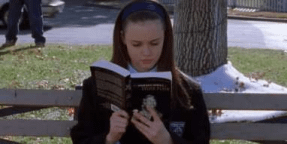
Rory Gilmore
Note. Taken from Gibbons, 2021.
The Gilmore Girls (Figure 2), which aired between 2000 and 2007, was a comedy-drama created by Amy Sherman-Palladino, who tried to craft a show that felt honest, portraying a mother and daughter who talk fast, think faster, and treat each other like equals (Savitch, 2025).
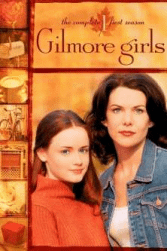
The Gilmore Girls
Note. Taken from https://paramount.originals.watch/
It started while she and her husband traveled through New England on the East Coast of the United States and experienced the charm and warmth of people who conversed on sidewalks and were genuinely part of each other’s rhythm. That’s when Sherman-Palladino recreated New England through her ‘imaginary town’ in The Gilmore Girls, named Stars Hollow (Figure 3).

Stars Hollow
Note. Taken from Diskin, 2019.
Just like many other characters in television dramas, Rory Gilmore is nothing but fictional. But how could a fictional character like Rory Gilmore inspire the young female readers two decades after the show ended?
Harvey Graff, an American comparative social and cultural historian at the Ohio State University, in his 1979 monograph “The Literacy Myth: Cultural Integration and Social Structure in the Nineteenth Century,” mentioned that “literacy is represented as an unqualified good, a marker of progress and a metaphorical light making clear the pathways to progress and happiness” (O’Neill, 2023). This perspective on reading as a moral activity remains true today. Deborah Brandt, English Professor at the University of Wisconsin-Madison, said that literacy remains a cultural mandate, taught and learned as a general good. With that in mind, Sherman Palladino’s fictional character, who loved reading paper books on every occasion, ranged from classic to modern, philosophical to romance, and encouraged others around her to do the same; and although Rory never expressed a belief that reading is a moral activity, she appeared to blend her intelligence with her literacy (O’Neill, 2023).
So, back to our question: how did Rory become a source of inspiration for the present-day young female readers? It all started with a collaboration between two young female BookTubers, Ciara Foster (UK) and Carolyn Marie (US), who are The Gilmore Girls fanatics and bookworms, and announced the first challenge, called “Rory Gilmore 24 Readathon” (Ciara, 2020). Soon after, the number of young female BookTubers participating in this annual challenge increased, and it continues to this day. A ‘peer-influence’ did affect certain behavior, I assume.
As librarians, how will you benefit from the readathon initiated by these young generation BookTubers?
- Dari Perpustakaan Menuju Duta Guru CBP Rupiah DIY 2026
- Rory Gilmore: A Fictional Character Turns a Reading Model for Young Female Readers
- Menggaungkan Semangat ‘Librarian Leader’ yang Proaktif dan Berdampak
- From Horton to the Grinch: A Story of Dr. Seuss
- The TPA Score and Indonesia’s Readiness for Its 2045 Vision